
Goulash Recipes and Cooking Tips
Goulash, a hearty dish steeped in history and tradition, has transcended its humble origins to become a beloved staple not just in Hungary, where it originated, but around the globe. This thick soup or stew, known for its rich flavors and comforting warmth, serves as a testament to the culinary ingenuity of Hungarian herdsmen, who first concocted this meal centuries ago. As we embark on a journey through the evolution of goulash, we’ll explore its transformation from a simple shepherd’s fare to a sophisticated emblem of Hungarian cuisine, illustrating how this dish has adapted and thrived across different cultures and kitchen tables worldwide.
Join our Vintage Recipe Facebook Group to discuss and find “new” old recipes to enjoy.
Links to find other recipes:
Goulash Recipes
Origins and Historical Background
The story of goulash begins in the 9th century with the Magyar shepherds of the Hungarian plains. The term “gulyás,” from which goulash derives, literally means “herdsman” in Hungarian. These early versions of goulash were rudimentary, consisting of meat dried in the sun and later cooked with water, onions, and other available ingredients to reconstitute into a nourishing meal. The dish was designed for practicality, allowing shepherds to carry their food in a portable form and cook it easily on the open plains.
Evolution of Ingredients and Variations
The introduction of paprika to Hungary in the 16th century, following the discovery of the New World, marked a pivotal moment in the evolution of goulash. Paprika, made from ground sweet peppers, soon became an integral component of the dish, contributing to its distinctive color and flavor that are now recognized worldwide. Over the centuries, goulash has seen numerous variations, including the addition of potatoes, tomatoes, and peppers, as well as adaptations like Székely Gulyás and Gulyásleves, showcasing the versatility and adaptability of this Hungarian classic.
Goulash Across Cultures
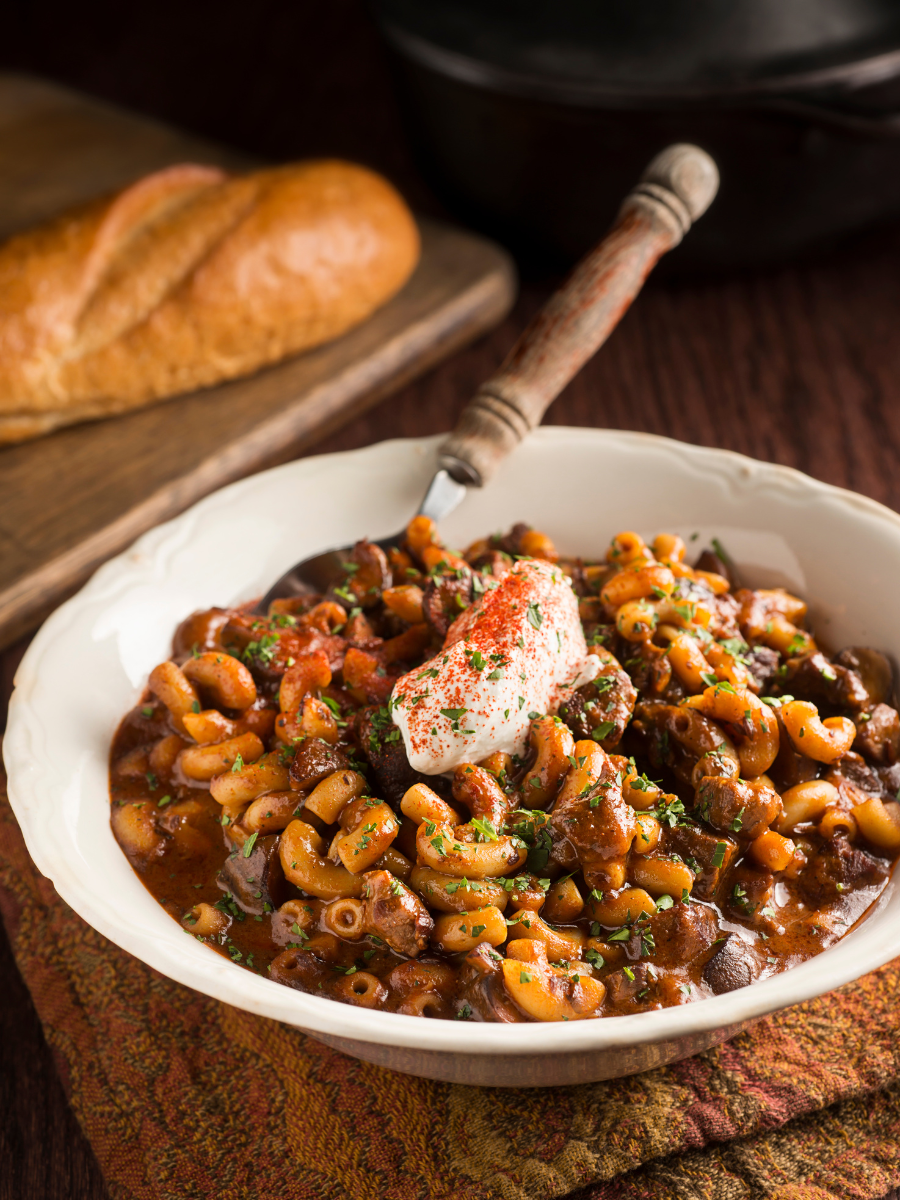
As Hungarians migrated, they took goulash with them, introducing it to new lands and palates. In the United States, goulash underwent further transformations, often incorporating ground beef, macaroni, and a tomato-based sauce, diverging significantly from its original form. This American version of goulash, sometimes referred to as “American chop suey,” highlights the dish’s ability to meld with local tastes and ingredients, making it a global comfort food.
Today, goulash remains a symbol of Hungarian culinary pride, celebrated in festivals and competitions, yet its essence—a simple, hearty meal bringing warmth and satisfaction—resonates with people everywhere. Whether enjoyed in its traditional form, with tender chunks of beef, potatoes, and a rich paprika-laden broth, or as one of the myriad variations that have emerged over time, goulash continues to be a dish that connects us to history, tradition, and each other.

Goulash Recipes


More soup recipes
See them all


Do you know this handwriting?
If this recipe looks like one from your family’s kitchen, or you grew up eating this, tell us below.
Leave a memory