
Sponge Cake: Recipes, History, and Tips
Sponge cake is a light, airy dessert known for its fluffy texture and subtle sweetness. Made with just a few ingredients—typically eggs, sugar, and flour—this cake relies on whipped eggs to create volume rather than chemical leavening agents like baking powder. The result is a delicate cake that can be enjoyed on its own or as a base for layered cakes, trifles, and other desserts. Originating in Europe, sponge cake has become a versatile classic worldwide and is popular for its simplicity and adaptability.
While the basic recipe for sponge cake remains the same, it can be flavored with vanilla, lemon zest, or almond extract, and often incorporates ingredients like butter for extra richness or milk to keep it moist. Sponge cake can be served with whipped cream and fruit, layered with frosting, or used in traditional desserts like tiramisu or Victoria sponge.
Join our Vintage Recipe Facebook Group to discuss and find “new” old recipes to enjoy.
Links to find other recipes:

Sponge Cake
Sponge Cake FAQ
What makes sponge cake different from other cakes?
Sponge cake is unique because it relies on beaten eggs to provide volume and lift, giving it a light, airy texture without baking powder or soda.
How should I store sponge cake?
Wrap it tightly in plastic wrap and store it at room temperature for up to two days or refrigerate for up to a week.
Why did my sponge cake turn out dense?
Under-whipping the eggs or overmixing the batter can result in a dense sponge cake, deflating the air needed for a light texture.
What’s the best way to slice sponge cake?
Use a serrated knife for clean, even slices, especially if layering. Sponge cake’s delicate texture requires a gentle touch when cutting.
Food History
Sponge cake’s origins date back to Renaissance Europe, where cakes first began to move beyond dense bread-like structures to incorporate whipped eggs. In the 17th century, French and Italian bakers were some of the first to experiment with egg foams, laying the groundwork for what we know as sponge cake today. By the 18th century, sponge cake recipes were common in England, where cooks perfected the technique of whipping eggs and sugar to create a light, fluffy batter.
Sponge cakes were typically baked in open wood-fired ovens, often served with fruit preserves or fresh cream. The cake became especially popular in Victorian England, where it served as the base for the Victoria sponge—a sandwich-style cake layered with jam and cream. As baking techniques and ovens advanced, sponge cakes became more consistent and easier to prepare. Today, they are a staple in many cuisines, from Asian-style roll cakes to classic European layered desserts like tiramisu and Black Forest cake. The versatility of sponge cake allows it to adapt to various flavors, frostings, and presentations, making it a beloved base for countless desserts.
Timeline
- 16th Century: Early versions of sponge cake appear in Europe with recipes using whipped eggs.
- 18th Century: Sponge cake becomes popular in England, often served with jam or fresh cream.
- 19th Century: Victoria sponge, a sandwich-style sponge cake, becomes a favorite in Victorian England.
- 20th Century: Variations of sponge cake spread globally, including Asian roll cakes and layered European desserts.
- Present Day: Sponge cake remains a classic dessert, loved for its versatility and airy texture.
Recipe Discussion
A classic sponge cake recipe requires just a few simple ingredients: eggs, sugar, and flour. The secret to its light texture is in whipping the eggs and sugar until they’re pale, thick, and full of air. This aeration creates the cake’s signature fluffiness. Once the eggs are whipped to the right consistency, flour is gently folded in to avoid deflating the mixture, and the batter is poured into a prepared cake pan. Some variations add a bit of melted butter or milk to add moisture and a richer flavor, but these ingredients are usually added carefully to maintain the airy structure.
Sponge cake is often made in a round or rectangular pan, and it can be enjoyed plain, dusted with powdered sugar, or layered with frosting and fillings. Many recipes use sponge cake as a base for more elaborate desserts, such as layered cakes with fruit fillings or rich creams. The cake’s neutral flavor profile makes it easy to customize with vanilla, almond, or lemon extract.
Preparation Tips
- Use room temperature eggs: Room temperature eggs whip up better, creating more volume for a lighter texture.
- Whip eggs and sugar thoroughly: Beat until the mixture is pale and tripled in volume. This step is key to achieving a fluffy cake.
- Sift the flour: Sifting helps prevent lumps and ensures an even, airy texture.
- Fold gently: When adding flour, use a gentle folding motion to avoid deflating the egg mixture.
- Bake immediately: Once the batter is ready, bake it right away to avoid losing air, which can cause the cake to collapse.
- Avoid opening the oven: Sponge cake is delicate, so try not to open the oven door while baking, as this can cause it to sink.
Recommended Kitchen Products
The links below lead to top-rated products on Amazon—if you use our links, we can save more recipes.
- Electric Hand Mixer: A hand mixer is ideal for whipping eggs and sugar, creating the volume needed for sponge cake.
- Round Cake Pans: Quality, non-stick cake pans ensure even baking and make it easy to release the cake without sticking.
- Fine Mesh Sifter: Sifting flour for sponge cake is crucial for a smooth texture, and a fine mesh sifter helps with this.
- Silicone Spatula: Essential for folding ingredients without deflating the whipped eggs.
- Cooling Rack: Cooling racks help the cake cool evenly, which is especially important if you plan to layer or frost it.
Serving Suggestions
- Layer with whipped cream and berries: Fresh strawberries, raspberries, or blueberries with whipped cream make a light and delicious filling.
- Dust with powdered sugar: A simple dusting of powdered sugar adds an elegant touch without overpowering the cake’s delicate flavor.
- Serve with a scoop of ice cream: Vanilla ice cream complements sponge cake’s airy texture beautifully.
- Make a trifle: Layer sponge cake with custard, whipped cream, and fruit in a bowl for an elegant trifle.
- Drizzle with chocolate ganache: For an indulgent treat, top with a warm chocolate ganache drizzle.
A Classic Cake to Enjoy for Any Occasion
Sponge cake is a timeless favorite that’s versatile enough for everyday treats and elegant enough for special occasions. With its light, airy texture and simple ingredients, it’s easy to see why this cake has been cherished for generations. Whether you enjoy it on its own, topped with fresh fruit, or layered with cream, sponge cake is the perfect base for endless dessert possibilities. Give this classic recipe a try, and discover the delicious, fluffy world of sponge cake!
Start Your Recipe Box
- Start your recipe box or your family or friends. View New and Vintage Recipe Boxes
- View Recipe Cards and Templates
- View Recipe Card Protectors and Sleeves
Vintage Goodies
- Vintage Kitchenware on Etsy
- Vintage Recipes on Amazon
- Vintage Cookbooks on eBay
- Vintage Cookbooks on Etsy
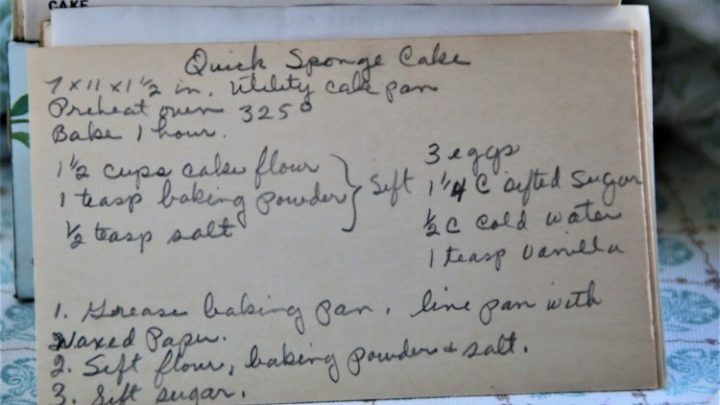
Sponge Cake Recipes




More dessert recipes
See them all


Do you know this handwriting?
If this recipe looks like one from your family’s kitchen, or you grew up eating this, tell us below.
Leave a memory